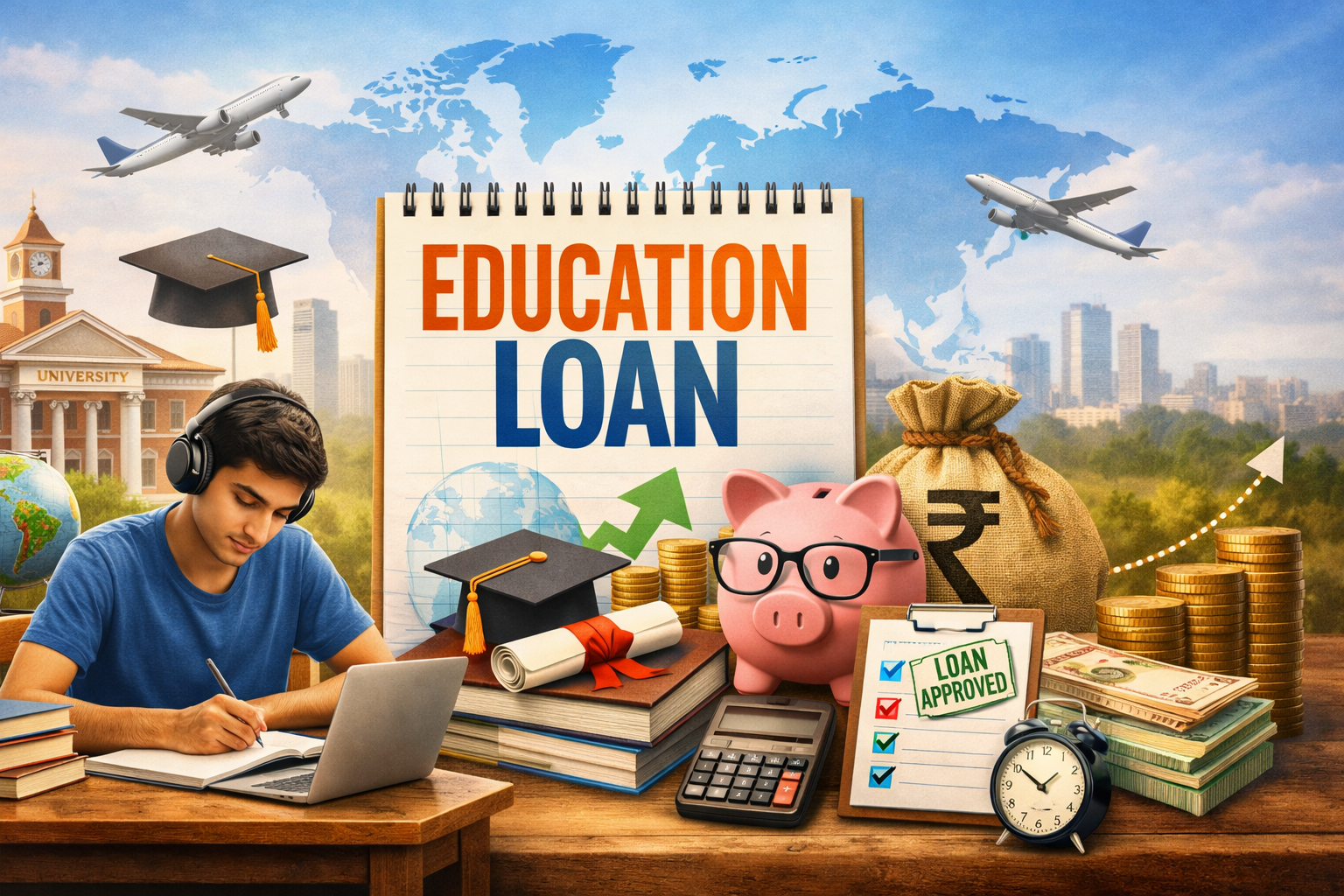
Education opens doors. But let’s be honest it can also open a bill that feels bigger than your dreams. That’s where an education loan steps in. It helps students access quality education without draining family savings or selling assets.
In this guide, you’ll learn everything about education loans how they work, who can apply, interest rates, repayment strategies, and smart tips to avoid common mistakes. The goal is simple: help you make informed decisions with confidence.
What is an Education Loan?
An education loan is a type of financial assistance offered by banks and financial institutions to students who want to pursue higher education in India or abroad.
You can use this loan to cover:
- Tuition fees
- Accommodation (hostel or rent)
- Books and study materials
- Travel expenses (for overseas education)
- Laptop or essential equipment
Unlike personal loans, education loans come with student-friendly terms, including lower interest rates and flexible repayment options.
Why Education Loans Matter Today
Education costs have increased significantly over the past decade. According to reports from the Reserve Bank of India, the demand for education loans continues to grow due to rising tuition fees and global study opportunities.
Here’s why education loans matter:
- They make higher education accessible
- They reduce financial pressure on families
- They allow you to study first and pay later
- They help build your credit history early
In simple terms, an education loan acts like a bridge between your ambitions and your financial reality.
Types of Education Loans
Not all education loans work the same way. Understanding the types helps you choose the right one.
1. Domestic Education Loan
You can apply for this loan if you plan to study within India. Most banks cover undergraduate and postgraduate courses.
2. International Education Loan
This loan supports students who want to study abroad. It usually covers additional costs like travel and foreign living expenses.
3. Secured Education Loan
You must provide collateral (like property or fixed deposits). In return, you often get:
- Lower interest rates
- Higher loan amounts
4. Unsecured Education Loan
You don’t need collateral. However:
- Interest rates may be higher
- Loan amounts may be limited
Eligibility Criteria for Education Loans
Each lender sets its own rules, but most follow a similar structure.
You usually need to:
- Be an Indian citizen
- Secure admission to a recognized institution
- Have a co-applicant (parent or guardian)
- Show academic consistency
Banks often evaluate the reputation of your college. For example, students admitted to top institutions get easier approvals.
Documents Required
Prepare your documents early to avoid delays. Most banks ask for:
- Admission letter from the college
- Identity proof (Aadhaar, PAN)
- Address proof
- Academic records (mark sheets)
- Income proof of co-applicant
- Bank statements
If you apply for a secured loan, you must also submit collateral documents.
Interest Rates: What You Should Know
Interest rates play a big role in deciding your loan cost.
In India, education loan interest rates usually range between 8% to 14% per annum, depending on the bank and loan type.
Key factors that affect your interest rate:
- Loan amount
- Type (secured or unsecured)
- Institution ranking
- Co-applicant’s financial profile
Banks often link rates to benchmarks like the repo rate set by the Reserve Bank of India.
Moratorium Period: A Big Relief
One of the best features of an education loan is the moratorium period.
This means:
- You don’t have to repay the loan immediately
- It covers your course duration + 6 to 12 months
During this time, some banks allow simple interest payments, while others let you defer everything.
Think of it as a “study now, earn later” system.
Repayment Process Explained
Repayment begins after the moratorium period ends.
Here’s how it usually works:
- Loan tenure: 5 to 15 years
- Monthly EMIs (Equated Monthly Installments)
- Option for prepayment (sometimes without penalty)
A smart strategy? Start paying interest during your course. It reduces your total burden significantly.
Tax Benefits on Education Loans
Yes, education loans come with tax perks.
Under Section 80E of the Income Tax Act, you can claim:
- Deduction on interest paid
- No limit on the amount
- Benefit available for up to 8 years
This reduces your overall cost and gives you financial breathing space.
Top Banks Offering Education Loans in India
Many banks provide education loans with competitive features. Some well-known options include:
Each bank offers different interest rates, loan limits, and repayment terms. Always compare before you decide.
Government Schemes for Education Loans
The Indian government also supports students through various schemes.
One notable initiative is the Central Sector Interest Subsidy Scheme (CSIS). It provides:
- Interest subsidy during the moratorium period
- Benefits for economically weaker sections
These schemes ensure that financial constraints don’t stop deserving students.
How to Apply for an Education Loan
The process has become much simpler today.
Step-by-Step Guide:
- Choose your course and institution
- Compare loan options
- Gather required documents
- Apply online or visit the bank
- Wait for verification and approval
- Loan disbursement directly to the institution
Many students now use digital platforms for faster processing.
Common Mistakes to Avoid
Even smart students make avoidable mistakes. Let’s fix that.
1. Borrowing More Than Needed
Only take what you require. Extra money means extra interest.
2. Ignoring Interest Rates
A small difference in rates can cost thousands over time.
3. Skipping Fine Print
Always read terms and conditions carefully.
4. Not Planning Repayment
Don’t wait until graduation to think about EMIs.
Smart Tips to Manage Your Education Loan
A little planning goes a long way.
- Start interest payments early if possible
- Choose shorter tenure to save interest
- Track your expenses during studies
- Build an emergency fund
- Consider part-time work (if allowed)
Treat your loan like an investment, not a burden.
Education Loan vs Scholarship: What Should You Choose?
Scholarships sound perfect because you don’t repay them. But they’re limited and competitive.
Education loans, on the other hand:
- Offer wider access
- Cover full expenses
- Provide flexibility
The best approach? Combine both. Use scholarships to reduce your loan amount.
Is Taking an Education Loan Worth It?
Short answer: Yes—if you plan wisely.
A good education increases your earning potential. Studies by organizations like the World Bank show that higher education often leads to better income opportunities.
But here’s the truth:
- Choose the right course
- Pick a reputable institution
- Understand job prospects
An education loan works best when backed by a solid career plan.
Final Thoughts
An education loan can shape your future if you use it wisely. It gives you the freedom to dream bigger and aim higher without immediate financial stress.
But remember:
- Borrow responsibly
- Plan repayment early
- Stay informed
Education remains one of the best investments you can make. And with the right loan strategy, you don’t have to choose between your dreams and your budget.
Sources & References
- Reserve Bank of India – Education loan guidelines and interest rate benchmarks
- World Bank – Research on education and income growth
- Section 80E of the Income Tax Act – Tax benefits on education loans
If you want, I can also optimize this article for a specific keyword (like “education loan in India” or “student loan interest rates 2026”) or add FAQ schema for ranking higher on Google.